
( 原 Synaptic Systems GmbH )
Explore the RNA Methylome with SYSY Antibodies
使用 SYSY 抗體探索 RNA 甲基化組
SYSY 抗體是 m6A 特異性抗體的首家商業供應商。他們的產品已被超過 700 篇科學出版物使用,並促進了研究 RNA 甲基化組的全新方法開發。單株抗體與重組抗體變體的推出,不僅補足了極為成功的多株抗 m6A 抗體,更確保了最佳再現性與批次間一致性。這些抗 m6A 抗體適用於多種應用,例如 MeRIP、m6A-CLIP 與 miCLIP 定序、傳統免疫沉澱、西方點墨法Western Blot及 ELISA。
| 目錄編號 (Cat. No.) | 產品描述 (Product Description) | 適用應用 (Application) | 包裝量 (Quantity) |
| 202 003 | m6A, rabbit, polyclonal, affinity purified | Dot blot, IP, MeRIP | 50 µg |
| 202 008 | m6A, rabbit, monoclonal, recombinant IgG | Dot blot, IP, ICC, MeRIP | 100 µg |
| 202 011 | m6A, mouse, monoclonal, purified IgG | Dot blot, IP, MeRIP | 100 µg |
| 202 018 | m6A, rabbit, monoclonal, recombinant IgG | Dot blot, IP, MeRIP | 100 µg |
| 202 111 | m6A, mouse, monoclonal, purified IgG | Dot blot, IP, MeRIP | 100 µg |
| 目錄編號 (Cat. No.) | 產品描述 (Product Description) | 適用應用 (Application) | 包裝量 (Quantity) |
| 428 003 | FTO, rabbit, polyclonal, affinity purified | K.D., WB, ICC, IHC-P (FFPE) | 50 µg |
| 417 003 | METTL3, rabbit, polyclonal, affinity purified | K.D., WB, ICC | 50 µg |
Introduction
核酸在 DNA 與 RNA 層級上的修飾,在許多不同的生物過程中扮演重要角色。在原核生物中,DNA 腺苷酸殘基在 5′-GATC-3’序列上的 DAM 甲基化,使細胞能在錯配修復過程中區分親代與子代鏈(A L Lu, D Y Chang, 1988)。在真核生物中,DNA 上不同的可遺傳 CpG 甲基化模式,在基因表現的差異性表觀遺傳調控中具有關鍵作用(Meehan et al., 1992)。
RNA 分子會經歷多種轉錄後修飾。在其成熟過程中,mRNA 分子會進行剪接、5’端加帽及 3’端聚腺苷酸化,這些步驟都是獲得完全功能性 mRNA 所必需的(Carter, 1994)。
近來,其他單核苷酸殘基的化學修飾也被發現參與蛋白質轉譯、RNA 加工與穩定性的微調。其中最重要的修飾包括不同 RNA 殘基在特定位置上的甲基化,例如 m1A、m5C、m6Am,以及最後但同樣重要的 N6-甲基腺苷(又稱 m6A),這是最豐富且可能最重要的 RNA 甲基化變體(Zhou 等人,2020 年)。m6A 的「寫入者」如 METTL 甲基轉移酶複合體,以及「擦除者」如 FTO(圖 1),可在甲基轉移酶辨識位點(即所謂的 DRACH 基序)上精細調控 m6A RNA 修飾的可逆狀態(Sergeeva 等人,2020 年)。SYSY 抗體公司從一開始就參與了這項研究。
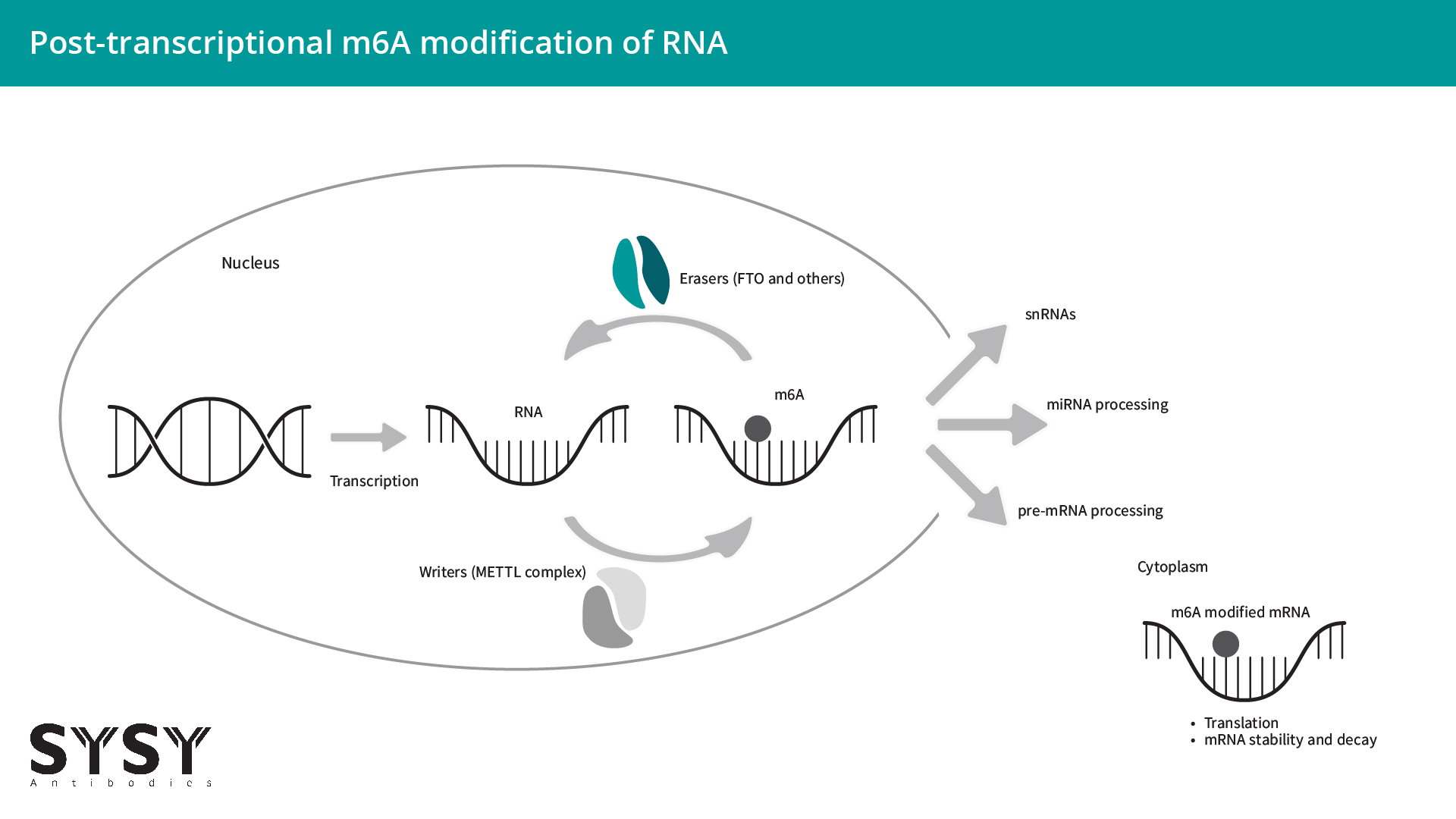
Figure 1: Posttranscriptional RNA methylation and demethylation are carried out by writers (METTL complex) and erasers like FTO. The resulting site-specific RNA modifications influence further RNA processing, translation and stability.
圖 1:轉錄後 RNA 甲基化與去甲基化由「寫入者」(METTL 複合體)和「擦除者」(如 FTO)執行。所產生的位點特異性 RNA 修飾會進一步影響 RNA 加工、轉譯與穩定性。
Exploring the spliceosome, where everything began
探索剪接體,這是一切開始的地方。
1987 年,Peter Bringmann 與 Reinhard Luehrmann 成功研發出首批針對 m6A 的多株抗體,用以探討此 RNA 修飾在真核剪接體中的重要性。這些抗體可從小型核核糖核蛋白(snRNPs)中,定量免疫分離出經 m6A 修飾的小型核 RNA(snRNAs)U2、U4 及 U6(Bringmann, Lührmann, 1987)。
1997 年,SYSY Antibodies 將 R. Luehrmann 與 P. Bringmann 研發的原始 m6A 抗血清納入產品目錄,成為首家商業化供應 m6A 特異性抗體的公司。
Discovering the m6A RNA methylome with MeRIP Sequencing
透過 MeRIP 定序探索 m6A RNA 甲基化組
後續研究發現,N6-甲基腺苷(m6A)修飾參與更多轉錄後調控過程,而轉錄組的 m6A 甲基化組也隨之成為一個全新且快速發展的研究領域。
Kate Meyer(Meyer 等人,2012 年)與 Dan Dominissini(Dominissini 等人,2012 年及 2013 年)的重要著作,為我們親和純化的 m6A 兔多株抗體(產品編號 202 003)在全球的成功奠定了基礎。Meyer 與 Dominissini 開發了基於抗體的 m6A 定序方法,此方法透過平行定序經免疫分離、長度約 100 至 200 個核苷酸且帶有 m6A 修飾的 RNA 片段(圖 2)來進行分析。
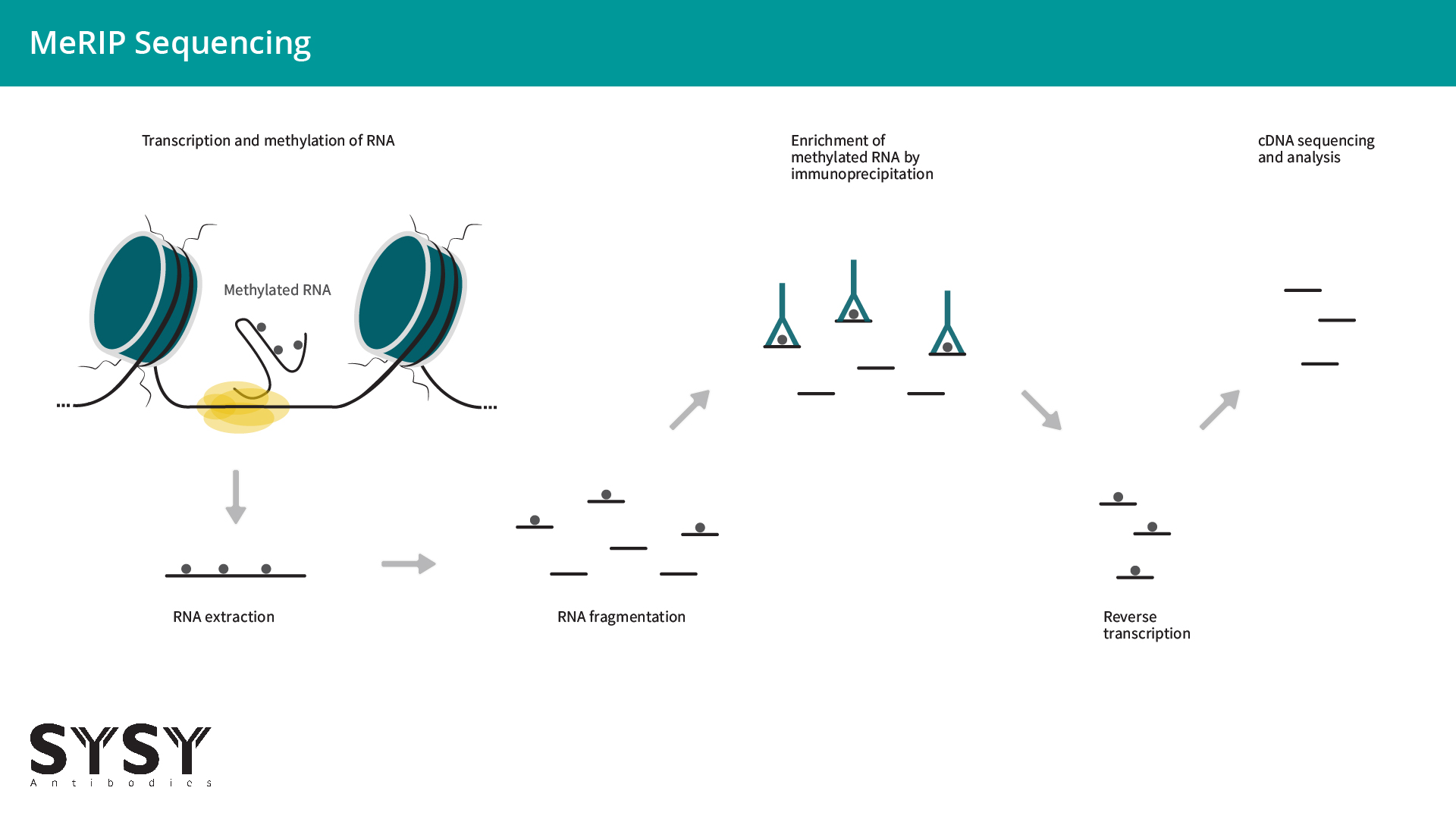
Figure 2: MeRIP seq is based on the parallel sequencing of immunoisolated m6A modified RNA fragments.
圖 2:MeRIP 定序是基於免疫分離的 m6A 修飾 RNA 片段進行平行定序。
這項新技術,也稱為 MeRIP 定序,讓科學家得以揭示許多轉錄後調控機制,這些機制全都受到 m6A 修飾的調控,進而導致相關科學文獻數量持續增長(圖 3)。
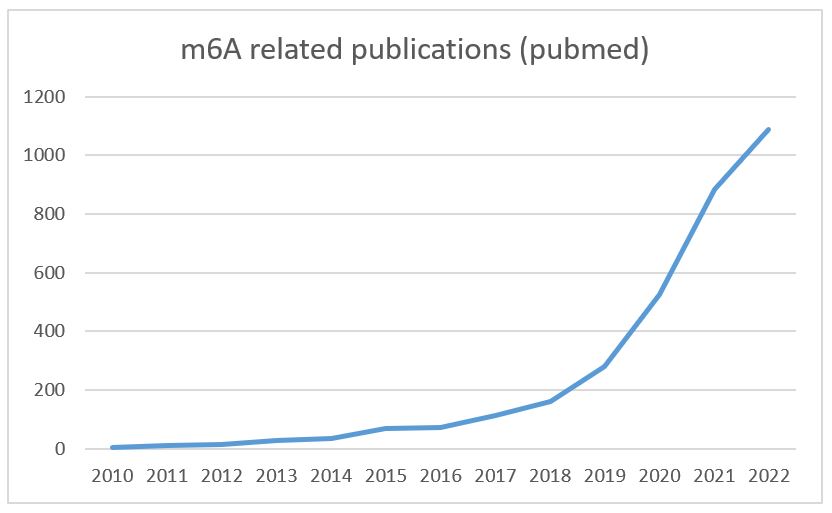
Figure 3: Development of the number of m6A related scientific publications over time.
圖 3:m6A 相關科學出版物數量隨時間的變化趨勢。
研究發現 M6A 高峰集中在 3’端非轉譯區、終止密碼子附近以及長外顯子區域 (3′ -UTR regions, near stop codons and within long exons)(7, 8)。已有證據顯示,m6A 修飾能影響 RNA 生命週期的每個環節,並對多項生理過程產生影響,例如幹細胞發育、轉譯調控、癌症形成、脂肪生成等(Linder et al., 2015)。
Advanced techniques 先進技術
透過 MeRIP 定序,m6A 殘基可定位於 100-200 核苷酸的區域。藉由將 m6A 修飾分配至已識別的 DRACH 基序,可大幅縮小 m6A 殘基的確切位置。然而,為達到單核苷酸解析度,必須開發更先進的技術。M6A-CLIP 與 miCLIP 技術基於 m6A 位點特異性的紫外線誘導抗體交聯,在 cDNA 合成過程中產生可預測的突變與截斷模式。這使得 m6A 殘基的定位更加精確(Linder 等人,2015;Ke 等人,2015)。
Literature
A L Lu, D Y Chang, 1988: Repair of single base-pair transversion mismatches of Escherichia coli in vitro: correction of certain A/G mismatches is independent of dam methylation and host mutHLS gene functions. PMID: 3284785
Bringmann, Lührmann, 1987: Antibodies specific for N6-methyladenosine react with intact snRNPs U2 and U4/U6. PMID: 2951275
Carter, 1994: Spatial localization of pre-mRNA transcription and processing within the nucleus. PMID: 7765739
Dominissini et al., 2012: Topology of the human and mouse m6A RNA methylomes revealed by m6A-seq. PMID: 22575960
Dominissini et al., 2013: Transcriptome-wide mapping of N(6)-methyladenosine by m(6)A-seq based on immunocapturing and massively parallel sequencing. PMID: 23288318
Ke et al., 2015: A majority of m6A residues are in the last exons, allowing the potential for 3′ UTR regulation. PMID: 26404942
Linder et al., 2015: Single-nucleotide-resolution mapping of m6A and m6Am throughout the transcriptome. PMID: 26121403
Meehan et al., 1992: Transcriptional repression by methylation of CpG. PMID: 1297654
Meyer et al., 2012: Comprehensive analysis of mRNA methylation reveals enrichment in 3′ UTRs and near stop codons. PMID: 22608085
Sergeeva et al., 2020: Modification of Adenosine196 by Mettl3 Methyltransferase in the 5′-External Transcribed Spacer of 47S Pre-rRNA Affects rRNA Maturation. PMID: 32344536
Zhou et al., 2020: Principles of RNA methylation and their implications for biology and medicine. PMID: 32920520