親水性? 疏水性? 材料科學
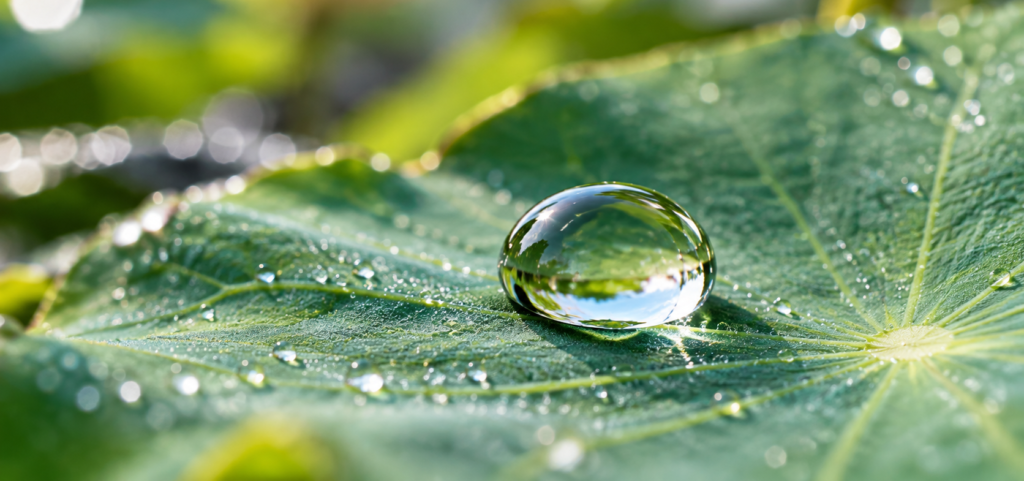
WCA · 表面潤溼性基礎
什麼是水接觸角
Water Contact Angle
水接觸角(WCA)是水滴與固體表面接觸時所形成的角度,反映液體對表面的潤溼程度,廣泛用於清潔度、塗層與表面能的評估。
Water contact angle (WCA) is the angle formed where a water droplet meets a solid surface. It indicates how well a liquid wets the surface and is widely used to assess cleanliness, coatings, and surface energy.
表面分類
Classification of Surfaces ・ 依接觸角大小區分
| 完全潤溼 Complete Wetting |
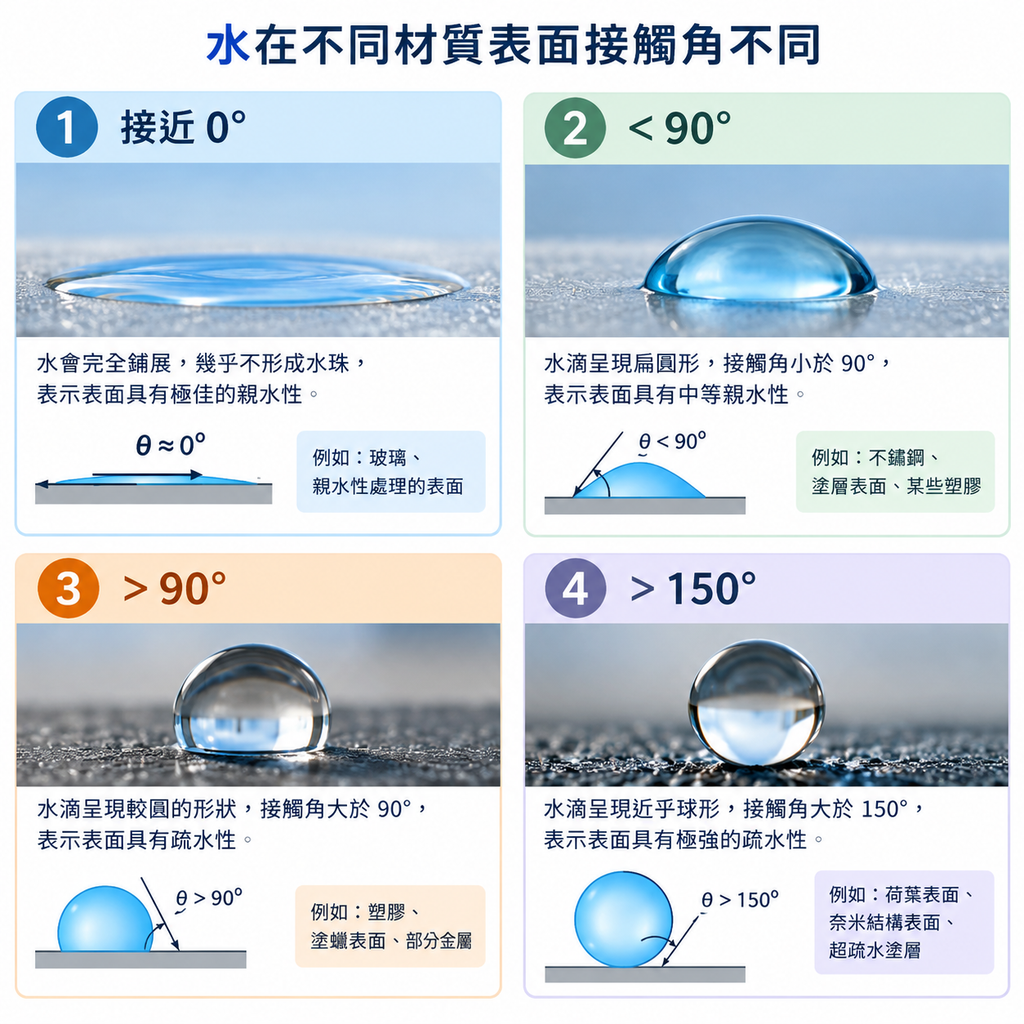
0° | 水完全攤平覆蓋在材料上,潤溼性最高。 The droplet spreads completely across the material. |
| 親水性 Hydrophilic |
< 90° | 水容易擴散於表面,潤溼性與附著力良好。 Water spreads easily, showing good wettability and adhesion. |
| 疏水性 Hydrophobic |
> 90° | 水滴呈圓球狀凝聚,潤溼性低,具防水效果。 Water beads up, showing low wettability and water repellency. |
| 超疏水性 Superhydrophobic |
≥ 150° | 水滴緊密聚集並容易滾落,常被稱為「蓮花效應」。 Droplets form tight beads that roll off easily, the so-called lotus effect. |
測量原理
How It Is Measured ・ 躺滴法與楊氏方程式
最常見的方式是「躺滴法」(Sessile Drop):以光學接觸角測量儀拍攝靜止水滴的外型,再由軟體計算水滴邊緣與基材交界處的角度。角度大小取決於液體內聚力與液固附著力之間的平衡,可由楊氏方程式描述。
The sessile drop method uses an optical goniometer to photograph a static droplet, and software calculates the angle at the solid–liquid–air boundary. The angle reflects the balance between cohesive and adhesive forces, described by Young’s equation.
實務上也會量測前進角(Advancing)與後退角(Receding),進一步計算接觸角滯後(Hysteresis),以判斷表面的均勻性與液滴黏附的程度。
Advancing and receding angles are also measured to determine contact angle hysteresis, revealing surface uniformity and droplet adhesion.
角度越低,表面越容易被水潤溼
The lower the angle, the more easily the surface is wetted by water.
為什麼重要
Why It Matters ・ 應用與判讀
表面清潔度
低接觸角通常代表表面乾淨、能量高,適合黏合、印刷或塗漆;偏高則可能有油脂、脫模劑或汙染物殘留。
A low angle usually indicates a clean, high-energy surface. A high angle may point to oils, mold releases, or contamination.
工業應用
用於評估防霧玻璃、防水塗層、黏著劑接合效果、隱形眼鏡表面親水性,以及高分子與金屬的表面改質成效。
Used to evaluate anti-fog glass, waterproof coatings, adhesive bonding, contact lens hydrophilicity, and surface treatments on polymers and metals.
結語 Conclusion
水接觸角雖然只是一個數值,卻能快速反映表面的潤溼性、清潔狀態與塗層性能,是產品開發與品質控制的基本功。
Though it is a single number, the water contact angle quickly reveals wettability, cleanliness, and coating performance, a fundamental tool for product development and quality control.
德國 DataPhysics Instruments GmbH 作為全球表面測量儀器的知名廠家,專業致力於為全球表面化學實驗室提供解決方案,產品覆蓋多個國家,擁有高水平的研發隊伍,為不斷擴展儀器功能和提升儀器質量而不斷努力
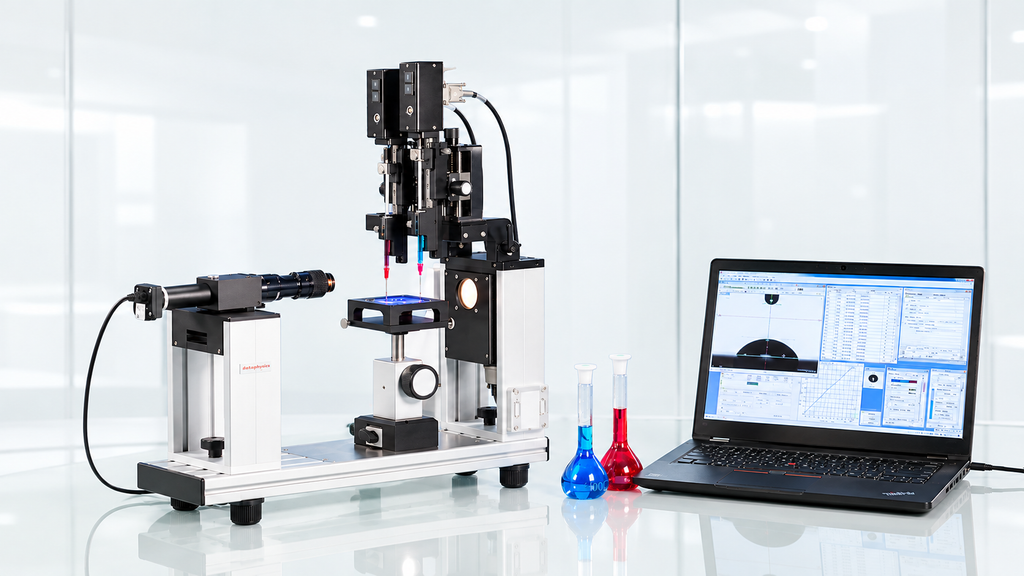
OCA – 接觸角測量儀 適合於固體表面與液體的接觸角測量,可計算表面自由能,適合材料表面特性研究

水面下接觸角(Underwater Contact Angle,通常透過俘獲氣泡法Captive Bubble Method 測量)
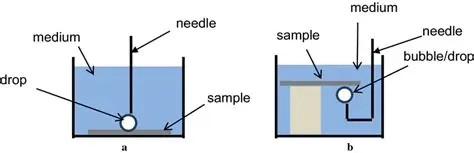
水面下接觸角(Underwater Contact Angle,通常透過俘獲氣泡法Captive Bubble Method 測量)是指將固體樣品浸入水中,由下方將一個空氣氣泡注入並貼附於固體表面,在氣、液、固三相交界處、朝向氣泡內部所測得的夾角。
核心概念與原理
- 測量方式:與傳統在空氣中滴水滴(靜滴法)不同,水面下接觸角是將固體完全浸在水中,用針頭從下方打入氣泡來測量。
- 與空氣中接觸角的關係:在理想的光滑平面上,水面下測得的氣泡接觸角與在空氣中測得的水滴接觸角理論上具互補關係
- 親疏水性判定(以氣泡角來看):
- 親水性表面:水會強烈潤濕固體,空氣氣泡不易貼附並容易滑開或呈現較大的氣泡接觸角。
- 疏水性 / 超疏水性表面:氣泡容易吸附在固體表面,氣泡接觸角較小;若表面具有「超疏水/超抗氣性(Superaerophobic)」特徵,氣泡角則非常大。
適用情境與優勢
- 水凝膠與軟性材料:如隱形眼鏡等水凝膠材質,若暴露在空氣中會因水分蒸發而變形,無法用一般方法測量,適合使用水面下俘獲氣泡法。
- 極親水表面:當材料極度親水時,水滴滴在上面會完全攤開(接觸角趨近 0°),無法量出具體角度,改用氣泡法則能有效評估。
- 工業與能源應用:常用於評估水電解(Hydrogen/Oxygen bubble evolution)、礦物浮選(Flotation)以及防污塗層在水中的氣泡黏附行為。
DataPhysics Instruments 的 OCA 系列
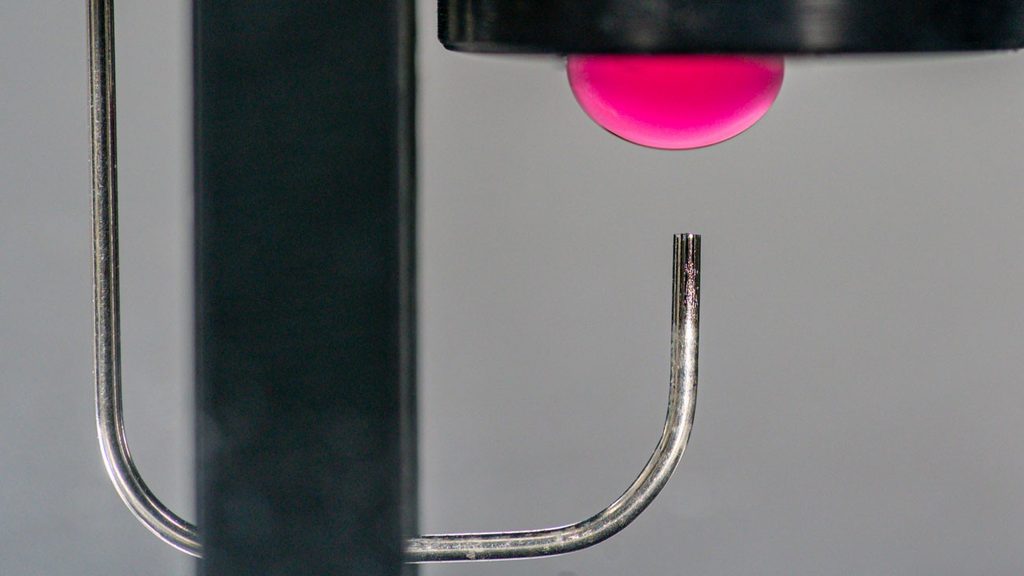
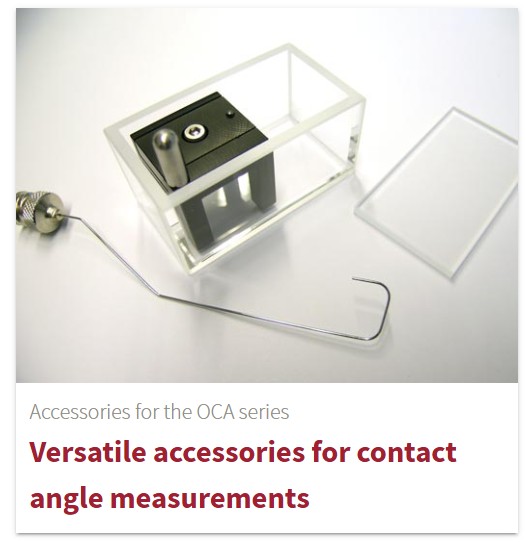
一種接觸角測量設備,例如 DataPhysics Instruments 的 OCA 系列,可用於採用“封閉氣泡法”。 這種測量設備包含一個給藥裝置(通常是帶有針頭的注射器),該裝置懸掛在樣品平臺上,以及一個光源和用於圖像評估的相機。
使用一個透明的容器,裝有液體,放置在樣品平臺上。固體樣品在液體中水平放置,使其完全被液體包圍。使用注射器和彎曲的 U 形針,在固體樣品下方放置一個氣泡。這使得固、液、氣三者之間的相互作用,從而在接觸面上形成一個特徵性的接觸角。該接觸角描述了參與相之間的平衡狀態。然後,使用高分辨率相機 optically 記錄接觸角,並使用圖像分析軟件對其進行量化。